
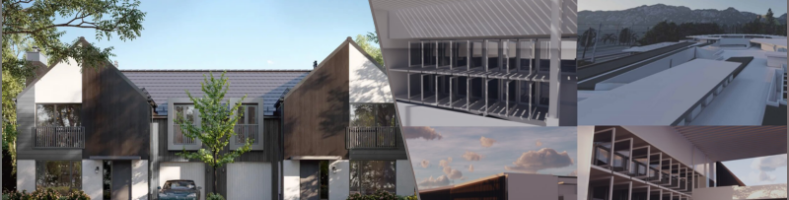
Technological development in the real estate marketplace, which is very rapidly developing today, affects properties at every stage of design, marketing, and sales. Among these technological developments, 3D visualization is one area that will take a game-changer to a new level of sophistication in real estate to enhance customer experience and improve the efficiency of real estate transactions.
From virtual tours to interactive models, 3D visual tools are transforming property sales and helping developers, as well as real estate companies, showcase properties better, enhance engagement, and speed up the decision-making process.
Cad Crowd has years of experience as a leading platform that connects the best freelance 3D designers with companies and firms. The article will aim to talk about how 3D visualization services are revolutionizing the face of property sales. It will look at key applications, advantages, and prospects of the technology in the real estate business.
🚀 Table of contents
Emergence of 3D visualization in real estate
The term refers to the creation of digital models and representations of properties using advanced CAD and rendering software. This means that maybe the same models that were previously represented as static images may now represent immersive virtual environments. While 2D blueprints and architectural drawings services have been the standard for decades, an opportunity has been opened up by 3D technology to more dynamically and visually invitingly represent properties.
Whereas earlier, it was the architects and designers who used the said technology for this very purpose, nowadays, the same applies to real estate marketing and sales. Today, with 3D visualization technology, a developer’s concept of a property is now directly translated to real property, where this technology helps the buyer and investor experience the property in ways that were hardly imaginable earlier.
RELATED: How the construction industry benefits from architectural visualization services
Key applications of 3D visualization in property sales
Virtual tours to a property
Among the most famous uses of 3D visualization in real estate lies in the possibility of providing online virtual property tours. This will enable potential buyers from the comfort of their homes to explore the house. Compared to traditional photography or video tours, 3D virtual tours allow a higher level of interactivity for design and drafting companies. The viewers can “walk” through rooms, zoom in on details, change perspective, and it becomes an even more immersive experience.
Virtual tours are especially beneficial for properties in construction or at the development stage. That way, developers can show their clients what the final product would look like even though the property is not yet complete. This program not only boosts confidence among the intending buyers but also expedites sales since the clients can make informed decisions much earlier in the process of development.
Interactive 3D models
Users can delve deeper into a property by engaging with interactive 3D models. It may also include features such as 360 views, changeable options including color change of walls and furniture, and viewing floor plans from various angles. This kind of tool is invaluable for real estate service companies because it can give potential buyers more control over their browsing experience of the property.
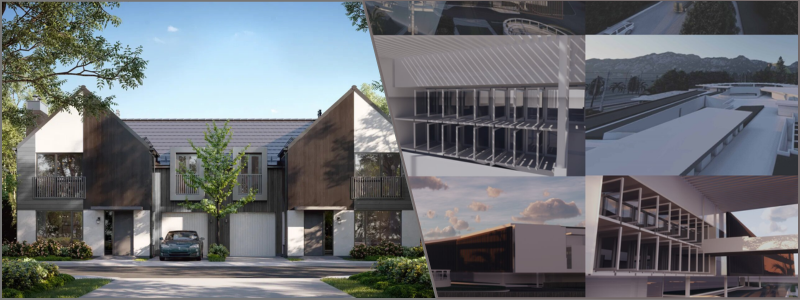
It is also possible to avail architectural 3D modeling services that demonstrate entire building complexes or residential communities with interactive 3D models. By adding surrounding landscapes, roads, and amenities, these models provide a far-reaching perspective of the property in context, which would be much more comprehensive as far as the value proposition of the development is concerned.
Photorealistic 3D renderings
Photorealistic 3D renderings are taken from images that provide potential buyers with lifelike images of a property and are quite useful in pre-sale properties that haven’t been constructed yet. Highly sophisticated software is required to create these renderings, and high-end rendering used at conveyance conveys the detailed features of a property, such as the texture on walls or lighting effects during the day.
In high-end real estate markets, aesthetics play a big part, and photorealistic renderings carry a good amount of sway when it comes to a buyer’s decision-making process. They help buyers see exactly what the finished property will look like, as well as help them see how specific design elements will come together in life. It builds trust and sets realistic expectations, eliminating the guesswork that often accompanies off-plan purchases.
Augmented reality (AR) and virtual reality (VR)
AR and VR have taken 3D visualization in real estate to a whole new level. While rich visualization is delivered through detailed 3D renderings and interactive models, AR and VR services even immerse the potential buyer fully. Prospective buyers can use their smartphones or tablets to superimpose 3D property models over their real environment, and they can see what the property would look like on that particular plot of land or in that particular neighborhood.
On the other hand, VR allows buyers to experience a property as if they were really inside it. Buyers can walk through properties wearing a VR headset, touch doors or furniture, and get an actual feel of space and scale. This can, in fact, prove helpful for international buyers or clients who cannot come and see the properties in person, thus being able to make confident purchases from all around the world.
Real-time customization of interior design
3D visualization tools also offer the facility for real-time customization. For example, a person with a house purchase consideration would be able to make changes in the interior design of his future house. It is possible to do this while choosing finishes and furniture layout modifications or investigating color scheme changes. It gives the client a chance to modify and see the changes in an instant in a 3D model, which also works great for the interior designer.
This feature means to developers that there is an unreplaceable sales argument where buyers would have the feeling that owning the design process would strengthen their emotional connection to the property. Moreover, because of personalization, the selling price is higher than the premium paid for personal features.
RELATED: Mistakes to avoid when deciding on an architectural visualization firm
Advantages of 3D visualization for developers and real estate companies
Upgrade of marketing and sales tools
Real estate marketing today has traditionally revolved around static images, floor plans, and written descriptions to preview a property. Though these are productive in themselves, they don’t evoke the dynamic involvement needed to capture the attention of consumers. That all changes with 3D visualization, an interactive and immersive technology that changes how properties are presented to the market.
With interactive 3D models, virtual tours, and photorealistic renderings today, developers and real estate companies now have the possibility of a much more engaging way to experience properties when showing prospective buyers homes. Clients now can almost “walk” through homes, move through rooms, and go around layouts from the comfort of their own devices. It not only catches attention but also helps the prospective buyer form a kind of emotional bond with the property.
Visual storytelling plays a very important role in the buying process. Buyers can envision all elements of the property, from the architectural style aesthetics to interior design services, down to photorealistic quality. Developers can convey the full potential of the space and, through this ability, provide buyers with the possibility to make informed decisions with complete confidence. In a competitive market, this difference could make more impact, thereby qualifying more leads and ensuring increased sales.
Faster decision
The old process of buying a property is quite slow, from doing site visits, meeting with architects, and reviewing paper documents. The patience that it requires sometimes drags the decision-making process out, and the loss in business occurs when the buyer hesitates or takes too much time to decide.
All that the buyer needs to know for 3D visualizer services is realized at the outset. In today’s world, instead of visiting ten properties in person, a client can surf through virtual tours and explore interactive models, which give an overall view of the property. Buyers can quickly and efficiently evaluate properties across town or on the other side of the world.
Accelerated decision-making works in favor of developers with reduced sales cycles realized. Projects can be sold and finished faster because buyers are now able to make faster decisions in the market. This not only ensures greater profitability but also completes the development process in a much more efficient manner. The need to wait around for the actual building, or even for that matter, the somewhat blueprints, is eradicated as buyers know the exact way the final product would look. There will be more confident and swift buying decisions so that the product will gain even more value.
Better communication with customers
The two biggest battles in the minds of developers and real estate agents are always how best to communicate complicated design concepts to customers. “Technical drawing and architectural plans are undoubtedly important, but the truth is that sometimes a lack of expertise makes them hard to explain,” notes Antonio Elis, especially when expectations are sure to be destroyed, or future revisions will be on the horizon if something hasn’t been fully understood in the presentation.
This is a barrier that 3D presentation design tools overcome by allowing an intuitive way of presenting design ideas, which is extremely visually appealing. The developers do not have to use all the industrial terminologies or 2D plans when using all-inclusive 3D models to present the layout, features, and design elements of an entire property. Clients may be able to view the property entirely, thus enabling instant feedback, and ensuring that their expectations are consistent with the final product.
To a certain extent, this is because better communication decreases the possibility of misinterpretations and creates a more collaborative process. This increases the feelings of involvement and being informed by the buyers, which increases satisfaction and confidence in the developer. The developer can ensure that the preference of clients is met by creating a more transparent and visually appealing dialogue, thereby minimizing the need to make costly adjustments later.
RELATED: Architectural visualization services: A complete comprehensive guide to mood and atmosphere

Time and cost saving
Cost control is highly crucial, especially when it comes to large projects. So, for developers and architectural design companies, this is a high cost overrun in case of delays or design changes in the later stages of the project. To an extent, 3D visualization renders the scenario cost-effective with fewer preliminary models and less numbers of trial designs. Developers can develop virtual models that are eminently changeable instead of a time-consuming, expensive prototype. Changes to design can easily be performed by a person quickly and efficiently in a 3D environment; this also ensures no manual revision corrections are required, which helps save time.
Thirdly, 3D visualization minimizes site visits to a physical site, especially for international clients or off-plan sales. The clients can view and explore the house anywhere in the world without having to travel. The method saves time as well as logistical costs that accrue from the logistics of making a visit, that is, traveling costs for both parties: the buyer and the real estate agent.
These savings can be very lucrative to developers because fewer site visits and fewer rounds of manual cycles mean fewer overhead costs. The ability to use 3D visualization to identify and address design issues during the planning stages minimizes the chances of construction delays. Faster completion of projects and better workflow results.
Greater buyer confidence
To the best of anyone’s knowledge, buying a property is one of the biggest investments you can ever have in your lifetime. It is, hence, very overwhelming to most. The uncertainty that always characterizes the product at hand, especially with off-plan purchases, creates thus hesitations or second thoughts in doing so. 3D visualization procedure helps discount such concerns because it depicts the property clearly and to the T.
With 3D real estate rendering services, clients will be able to go into every aspect of a house-from the biggest plan all the way to the smallest design feature, be it finishes, fixtures, or landscaping. This type of openness allows buyers to have a proper expectation of what they buy because it creates trust and confidence in the developer.
Due to this, the buyers are more confident, and this gives the developers fewer cancellations or renegotiations. This is because when they see what they are getting, they tend to pull out very few from deals that were already made because of some unprojected design aspects or features. It is this aspect of 3D visualization that builds the developer-buyer relationship and makes sales go as smoothly as possible with high client satisfaction rates.
More tips to boost the sales of a property using 3D visualization
The real estate market is continuously changing, and its trend of using 3D visualization proves to be a great tool to sell properties. It not only gives the buyer an experience against a two-dimensional photograph or floor plan but also enables him to live in a space much more easily. This is how real estate developers and agents can successfully use the scope of 3D visualization to sell more properties.
Show pre-construction properties
One of the most valuable uses for 3D visualization is the provision of properties that are still in construction or even planning stages. Buyers do not invest in a project unless they see something in front of them; therefore, providing a detailed model of the 3D structure gives an excellent impression of the exterior and interior spaces, making the property look more realistic – usually with the help of 3D structural design services.
These graphics may highlight attractive architectural details, landscaping, or selections in interior design that can make a project attractive to buyers. Developers can now offer virtual tours through the property with the help of users who can go for a “walk-through” and see rooms from different angles, thereby selling properties much earlier than when the construction is finished.
Interior personalization for buyers
Personalization is needed today in a competitive real estate market, and 3D visualization makes it easier to offer potential buyers options tailored to their choice. For example, with interactive 3D models, buyers can opt for whatever design options they may like, including different colors of paint, flooring, cabinetry, and even furniture layouts. Real estate agents and developers can bridge individual preferences by enabling the client to see how different choices affect the look and feel of a space, thus making the property more appealing to a larger public.
This personalization also allows developers to advertise the property at different price points, effectively meaning that buyers can preview what real-time difference premium finishes or upgrades will look like. It creates buy engagement and builds an even deeper level of emotional connection between the buyer and the property, which may equate to a more speedy decision and higher sale prices.
Virtual tours for international buyers
For buyers who cannot be there physically, 3D virtual staging tours are the beauty that marked the world. One can experience a property interactively from any part of the world at his or her own pace. It’s very valuable for international investors or out-of-town buyers to make confident decisions without the need to be physically present onsite.
These virtual tours can be accessed via websites or specialized apps and are mostly compatible with headsets, thus offering the buyer an immersive experience. Therefore, by increasing their reach with 3D visualization, real estate professionals can tap into a wider audience. Thus, the chances of sale increase by percentages.
RELATED: What is architectural visualization and why architectural rendering services use it
Create emotional appeal
Emotion is largely attached to the buying decision, and 3D visualization sets that emotional appeal ablaze in the hearts of buyers by bringing the house to life for them. It not only lets them see the space but also lets them feel how they would live there. The lighting, texture, and general ambiance of space are much better carried by the 3D rendering than even static photos or 2D drawing plan services. Buyers can imagine having dinner in the dining room or just relaxing in the living room.
Such emotional connection will likely make them make decisions faster since they feel sure that the property fits their needs and lifestyle. Sharp visuals also evoke a feeling of luxury and exclusivity that can justify a higher price.
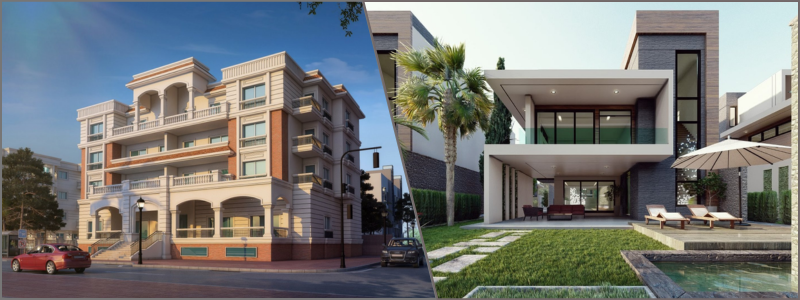
3D rendering services and virtual tours can be great marketing aids, especially on social media. Rich graphic images are likely to be shared and viewed online, thereby increasing the potential for generating interest in a property. This is something developers and agents can do for advertisements and websites as well as virtual open houses. This attracts tech-savvy buyers while also offering a professional edge that inspires trust.
Providing more detailed visual representations, customization options, and virtual tours not only assists in a better buyer experience but also enables developers to cover a much wider audience for their property. Properties that make use of these tools are sure to attract more attention than usual and help build stronger emotional connections, resulting in faster and higher-priced deals.
The future of 3D visualization in real estate
As 3D visualization technology continues to evolve, its impact on the real estate industry will only grow. Advancements in AR, VR, and AI will enable even more immersive and interactive experiences, allowing buyers to not only explore properties but also simulate daily life within them. For example, future applications could allow buyers to “experience” a home’s lighting throughout the day or visualize how their furniture would fit within a space.
Moreover, as these technologies become more accessible and cost-effective, they will likely become the norm rather than a luxury, with even smaller real estate companies and developers adopting 3D presentation services and tools as part of their standard sales process.
Sustainability will also play a key role in the future of 3D visualization. As more developers focus on eco-friendly building practices, 3D models can help visualize the environmental impact of a property and demonstrate how sustainable design features, such as solar panels or green roofs, will be integrated.
3D visualization is transforming the way properties are sold, offering a host of benefits for both developers and real estate services companies. By providing immersive, interactive, and photorealistic representations of properties, these tools help enhance marketing efforts, accelerate decision-making, and build stronger connections between buyers and sellers.
RELATED: 5 types of 3D visualization used by architectural design firms for CGI projects
How Cad Crowd can help
Developers and real estate services companies need to keep up with the technological trends now more than ever. Gone are the days when they can just settle for what’s available. Cad Crowd can help you find 3D visualization experts who will showcase your real estate projects in the best possible light. We’re an industry-leading platform that can help you find the best design professionals for your real estate projects. Request a quote today.



