AI is here! I don’t know why I said that; it’s not old news. How can AI innovations transform companies’ consumer product design? I’m sure you’re well aware of the fact that AI has been here for quite a while now and has been making headlines everywhere in recent years, but the technology itself is actually a lot older than you think. The first AI program was developed in the 1950s, and then it really moved up in the world when IBM’s supercomputer named Deep Blue was put in a chess match against (then) World Champion Garry Kasparov in 1996 and lost.
Pretty anticlimactic, right? But in the rematch the following year, the freshly upgraded Deep Blue came out as victor at the end of the day. A similar milestone in AI development happened again in 2016 when an AI program named AlphaGo defeated Go (board game) top player Lee Sedol. For some reason, however, AlphaGo just didn’t come out as memorable as Deep Blue.
RELATED: How AI trends influence new product design and development companies
Both Deep Blue and AlphaGo are examples of what we usually call “machine-learning” AI. They are able to make predictions and decisions by analyzing the patterns in a massive set of data called algorithms. Nowadays, you might observe that there are AI innovations other than machine learning. Generative AI is another kind of AI that is currently undergoing rapid development and taking the world by storm.
🚀 Table of contents
What generative AI can do?
Even though generative AI is still in its early stages of development, it has already demonstrated remarkable potential in the industrial world as far as industrial design services are concerned. There’s a good chance that you’re already familiar with some of its works, spread all around like wildfire across the web in the forms of texts, images, audio, videos, and, yes, deepfakes. Best of all, generative AI can create them in a matter of minutes, if not seconds. The ongoing buzz around generative AI has been mainly driven by how easy it is to use the technology – some are actually free to use.
All you have to do is open an Internet browser and search for websites that offer such services. You’ve also heard stories about students writing their essays using AI tools – I can assure you it really is very easy. I can actually use a similar tool to produce this write-up, but it just doesn’t seem right to ask a generative AI for an opinion about itself. Some of today’s most popular applications, such as ChatGPT, Stable Diffusion, Microsoft Copilot, GitHub Copilot, and Google Gemini, are all powered by generative AI.
RELATED: Key benefits of industrial product design – using industrial product design services
In fact, all those impressive programs have captured people’s attention and imaginations all around the world in such a way that Deep Blue and AlphaGo could only dream of. Today, generative AI can produce feature-length films; I’m as excited and worried about what it might be able to do in the next two to three years, just as you are. But I digress.
Product designs and generative AI
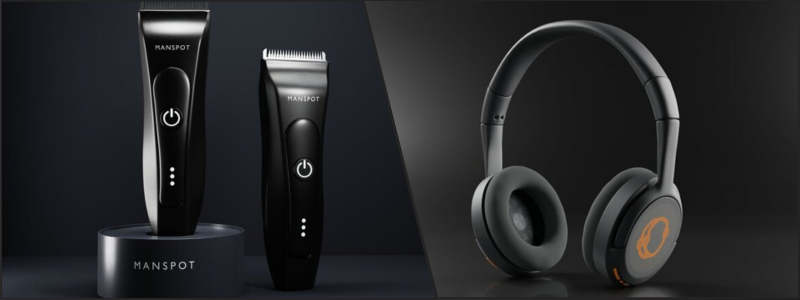
Among the biggest industry sectors affected by the swiftly advancing generative AI is consumer product design firms. The technology might look and feel fresh, but it has already exerted a massive influence on how design companies and agencies come up with their own unique ideas for new products and packaging. And it’s not that hard to see why. I don’t have to remind you that creativity is the driving force behind every innovation.
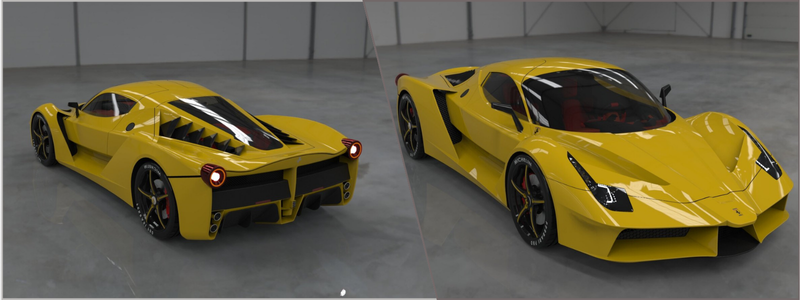
Generative AI – with all its language processing capabilities, machine learning algorithms, and data analysis – is a remarkably powerful software program to explore countless ideas (including both the technically feasible and impossible kinds) and visualize them as photorealistic imagery. What’s truly noteworthy is how fast it can do all those things. For example, it might take a few days or weeks for a team of experienced product designers and engineers to come up with a truly feasible idea for a unique radio clock.
RELATED: How are product concept design services used to innovate during product development?
However, generative AI can create a CGI and design the same product within a second or two. Using the accurate and detailed text-based prompt, you can have a detailed result without slowing it down. Imagine I’m your boss, and I ask you to design and draw a simple yet unique design of a radio clock. Can you do that in two seconds? I don’t think so.
Thanks to AI’s abilities to quickly explore dozens or hundreds of design ideas and visualize all those concepts in high fidelity early on in the product development process, companies and agencies can, therefore, elicit more focused feedback from their design engineering experts and designers as they analyze the feasibility of those ideas.
Can AI revolutionize the design process?
Maybe the more appropriate question is whether AI has revolutionized the product development process already. Either way, we need to understand only the very basics of how it works in the design process to answer the question. Listed below are the following three functions:
RELATED: 3D Product rendering company or 3D artist: how to hire for new product designs?
- Capability of exploring a vast array of design concepts and visualizing – Generative AI can explore a wide range of data at a faster rate compared to traditional methods. Because of this, It can provide designers and engineers with a broad range of creative options to consider.
- Ability to give suggestions and improve design – For instance, if I gave the generative AI an image of an existing product design, I could ask it to generate suggestions to improve the existing product design. The suggestions came from the generative AI analyzing the image and exploring its wide range of design concepts, usually the results might include minor tweaks and flaws to major overhaul in functionality, aesthetics, features, and etc.
- Create design for a specific demographic – Another function of Generative AI, is that I ask it to produce two versions of the same exact product; one is designed to appeal to adults, whereas the other is geared toward children. This is useful, especially for advertising where you have a specific target audience you want to reach.
Impressive, I know. Having said that, AI isn’t the end-game tool as everyone seems to believe. It’s a smart, speedy, knowledgeable tool to help you find ideas, render prototype design services, discover room for improvement, and customize designs based on data sets. I’d suggest you think of generative AI as a brilliant co-worker. You might be worried that it will soon take over the office, causing you to get anxious in its presence, but once you realize that you two need each other to form an effective team, things start to make sense.
RELATED: 10 Simple products that made millions for inventors
Generative AI isn’t sentient software like Skynet or any other futuristic sci-fi stuff; the program can’t do much of anything on its own. You must ask specific questions so it can give specific answers. AI is both a brilliant co-worker and a strictly-business professional as it presents you solutions after careful calculations, no matter the problem or challenge. One good thing about AI is its very direct way of answering problems, especially when you indicate specific directions and solutions you want the AI to provide.
To give an example, you want the AI to help you generate ideas on how to modify its current answer rather than creating a brand-new design. This means that it will only scan a specific set of data about the product in question, and if the product rendering designer fails to set a limit in the directions and prompts, the AI may offer them plenty of irrelevant suggestions. But in all seriousness, iteration has always been a big deal with consumer product design.
I won’t say that creating a brand-new design is easy; it’s just that striving for continuous improvement often proves to be one of the most laborious tasks in product development. Now that companies and agencies have generative AI, they can create mockups and virtual prototypes much quicker than ever. Among the most powerful things a generative AI can do is that it helps you shorten rendering time from days to just minutes. This grants your product designers and engineers the ability to prioritize the creative sides of the project.
RELATED: Accessible design: better products for everyone
Also, other capabilities of generative AI are the possibility to handle (or streamline) grueling tasks such as compiling user feedback, collecting market data, classifying news feeds based on keywords, pulling the latest trend reports from reputable sources, and summarizing relevant industry news, to name a few. Because of this, AI has been treated like an over-qualified assistant, especially if the tasks are simple and can be done easily.
However, I think the best implementation of such an approach is when you want to focus on the creative side of the job and you can’t be bothered with mundane tasks. In other words, you’re not putting AI at the forefront of the idea generation but using it as a method to allow your own creative mind to flow more freely. AI might not have completely revolutionized the product design process, but it’s clearly on the way to get there. It’s still primarily a tool – one that happens to be able to make great impacts on every step of the design process, from the early brainstorming session to product iteration.
I’m just as excited about AI as the next person is. Having said that, I think it’s too early to talk it up as if it’s going to transform the product design process in a radical way on its own anytime soon. In this generation, the current state of AI still hasn’t surpassed human intelligence, especially in innovating and the ability to be imaginative, but it does have relevant potential to help people, including engineers and designers, elevate their creativity and open the doors to greater productivity.
RELATED: Designing prototypes: 3D design services for inventors and companies
How Cad Crowd can help
As AI is essentially software, you first need help in developing it to make sure it can do what you want it to do. Cad Crowd helps you connect with hundreds of talented AI developers who are professionally trained in machine learning and big data analysis and are capable of building a robust artificial intelligence program for every specific purpose. Give Cad Crowd a call and get your free quote today.